Commercial Waste in Islington

Commercial Waste Islington provides a focused waste removal service for businesses that need reliable handling of routine and one-off commercial waste. The service is built around commercial waste collections in Islington, with practical support for offices, shops, hospitality premises, studios and managed buildings that need rubbish taken away without disrupting the working day. The aim is straightforward: keep working spaces clear, deal with mixed business waste properly and offer a simple route to request a quotation.
We handle common non-hazardous business waste streams and can discuss the right approach for the materials you need removed. That may include general refuse, office clearances, furniture disposal, bulky items, or waste left after a move, refurbishment or tidy-up. Where a load contains different materials, it is usually best to separate what can be reused, recycled or disposed of in different ways, and our service can be planned around that rather than forcing everything into one generic collection.
Need a clear price for commercial waste collection? Send the details of your load and the location, and ask for a quote that matches the work you actually need. If you are comparing options, it helps to think first about what is being removed, how accessible it is and whether the job is a single uplift or an ongoing arrangement.
Business waste collections for day-to-day operations
Regular business waste collection is often the simplest way to stop unwanted material building up behind the scenes. Offices, shops and professional practices usually generate a predictable mix of packaging, paper, broken fixtures, unwanted stock, storage-room waste and general rubbish. A planned collection helps keep circulation areas usable and makes it easier to maintain a tidy workplace, especially where waste would otherwise be moved around several times before it is finally disposed of.
We can discuss collections for premises that need waste removed as part of normal operations or during quieter periods. In some cases the most suitable arrangement is a single clearance; in others it makes sense to organise repeat removals for a steady stream of rubbish. Either way, the main decisions are usually about volume, access and the kinds of materials involved. If you are unsure how to describe the load, a short list of the items is often enough to begin with, and a follow-up photo can help refine the quotation.
Plan the job in a way that suits your premises. Consider which areas are being cleared, whether anything is stacked or enclosed, and whether items can be left in one place for collection. A concise summary is usually enough to start the conversation, and it saves time later if any awkward items, lift access or restricted entry points are mentioned up front.
Office waste, furniture and equipment disposal
Office clearances often involve more than one type of waste. Desks, chairs, shelving, filing cabinets, monitors, printers and mixed office rubbish can all be part of the same job, and the most efficient approach is often to remove them together after separating anything that needs special handling. A sensible office waste plan can also reduce clutter in storage rooms, meeting spaces and back-of-house areas where unused items are kept for too long.
Furniture and equipment disposal needs a practical eye because bulky items can take longer to move than ordinary rubbish. Flat-pack furniture, boardroom tables, reception seating and storage units may need to be dismantled before they can be taken away safely. Where sensitive documents or storage media are present, those items should be identified separately so they are not mixed with the general load. If shredding or confidential disposal is relevant, it can be discussed alongside the rest of the collection.
For larger workplace clearances, it is helpful to decide what is staying and what is going. That distinction keeps the load accurate and avoids unnecessary removal of items that are still in use. Clear labelling and a simple room-by-room list can make the process easier, particularly when several staff members have left items in different places over time.
Bulky items, fittings and mixed non-hazardous waste
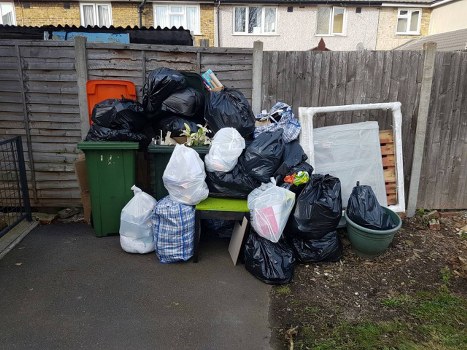
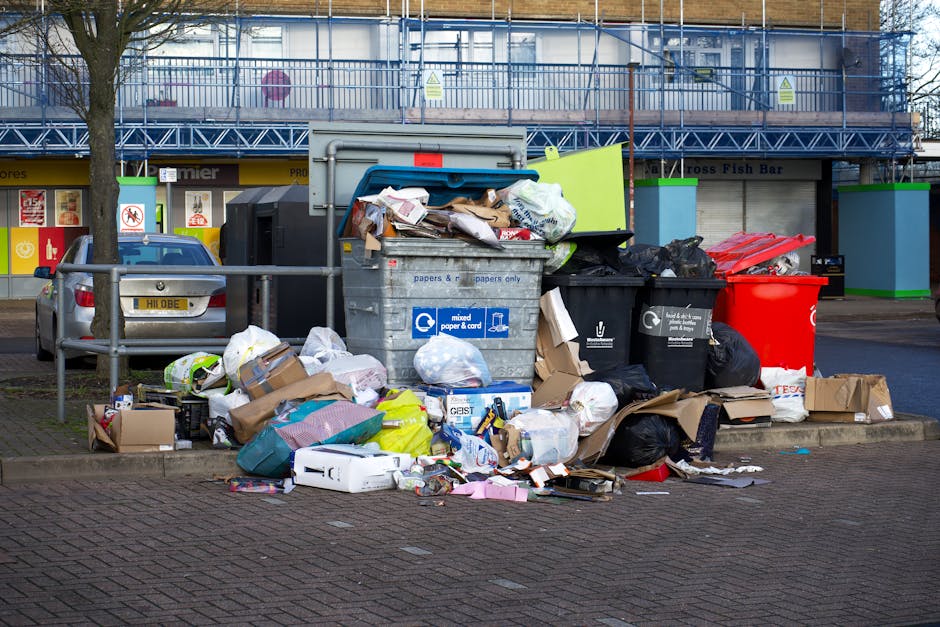
Some commercial collections are straightforward rubbish removals; others include bulky objects that occupy a lot of space but are not difficult to dispose of once they are moved together. Reception furniture, display units, storage cabinets, broken fixtures and worn fittings can often be handled as part of a wider commercial waste collection. Mixed loads are common in busy premises, so the key is to identify the contents clearly and separate anything that is not suitable for standard removal.
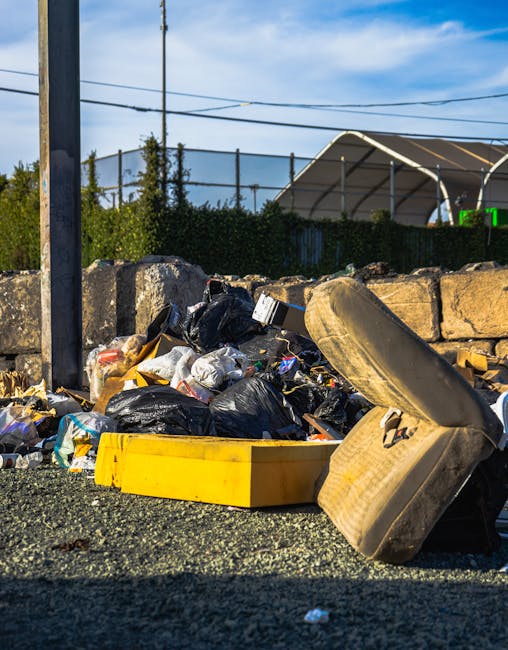
Where the load includes appliances, upholstered furniture or other larger items, it is useful to check whether those pieces are being removed on their own or alongside general waste. That affects how the job is planned and how the quotation is prepared. We can also discuss whether the items are located on the ground floor, in a basement, in a lift-served building or in a room with narrow access, because those practical details can affect the time needed on site.
Useful information for this kind of work usually falls into three groups:
- what items need removing and roughly how many there are
- where the items are stored and how easy they are to reach
- whether the load includes mixed materials that should be separated first
Commercial clearances for premises, storerooms and back areas
Commercial waste removal is not limited to front-of-house rubbish. Many jobs involve storerooms, cupboards, plant rooms, basements, rear yards, service corridors and other back-of-house spaces where clutter accumulates gradually. Clearing these areas can make routine operations easier because staff are no longer working around redundant equipment, packaging or damaged items that should have been removed earlier. The work is usually most efficient when the load is grouped clearly before collection.
Clearance work is often more varied than a standard bin lift because it may include a mixture of small and large objects. Old display materials, spare parts, damaged stock, crate waste, packaging, shelving, and awkward miscellaneous items can all appear in the same room. A well-planned clearance focuses on the actual contents rather than assuming the same method suits every premises. That is why accurate descriptions matter: they help define whether the job is a light clearance, a fuller empty-out or a one-off business waste removal.
Use the quotation stage to match the service to the load. A short description, a count of bulky items and any access notes are usually enough to begin. If the job is sensitive, busy or time-limited, it is worth saying so early so the collection can be arranged with the least possible interruption to your schedule.
Furniture disposal and recycling choices

Furniture disposal is often part of a wider commercial waste job, but it deserves specific attention because different items may need different handling. Wooden desks, office chairs, meeting tables, filing cupboards and reception furniture can all be taken away as part of a managed collection, yet the practical detail depends on size, condition and construction. Some items are best dismantled before removal, while others can be carried as complete units if access allows it.
Where possible, it is sensible to separate reusable or recyclable items from damaged goods that have reached the end of their working life. That approach can simplify the waste stream and make the overall load easier to describe. We can discuss furniture disposal alongside other non-hazardous waste so you do not need to organise separate arrangements for every piece. If you have a mixture of office furniture and ordinary rubbish, the job can usually be planned as one collection with clear categories.
For customers arranging a one-off office or business clearance, furniture often forms the largest part of the work, so measuring the main items or listing them accurately can help. Good preparation does not need to be complicated; it simply means knowing what is being removed, what should stay and whether any item needs extra dismantling before the collection takes place.
About Islington
Islington is an inner London district in the London Borough of Islington, north of the City of London and close to several other central areas that have long been linked by movement, trade and housing growth. Its character is often associated with a dense pattern of streets, terraces and squares that reflect different phases of development from the Georgian period onward, alongside later Victorian and twentieth-century additions. Upper Street is one of the best-known thoroughfares, running through a busy corridor of shops, restaurants, theatres and everyday local activity, while quieter residential streets spread away from that spine into the surrounding neighbourhoods. The area includes a mixture of converted buildings, estates, apartments and commercial premises, giving it a layered urban form rather than a single uniform identity. Regent’s Canal also passes through the wider district, adding a waterway that has played a practical and visual role in London’s transport and industrial history. Cultural life in Islington is supported by venues, galleries, pubs, performance spaces and civic institutions, and the district has long been known for both residential appeal and a strong local high street tradition. The mix of older architecture and later redevelopment means that the streetscape can change noticeably from one block to another, with mews, terraces, modern apartments and commercial frontages sitting close together. That variety is part of what gives Islington its distinctive urban feel, combining historical continuity with the constant adaptation typical of central London.
Service planning, access and waste separation
Planning a commercial waste collection well usually comes down to access, separation and timing. If items are scattered across several floors or rooms, the job may need a slightly different approach from a straightforward curbside uplift. It is helpful to know whether there is a lift, whether loading can happen near the entrance, and whether anything needs to be carried from a basement, mezzanine or upper floor. Those details affect how the removal is organised and how long it is likely to take.
Waste separation is also important because business premises often produce a mixture of general rubbish, recyclable materials and bulky furnishings. A collection can be easier to manage when similar items are grouped together in advance. Even a simple sort into furniture, office waste and miscellaneous rubbish can make the load clearer and reduce confusion on the day. If there are items that should be kept back, labelled or removed by a different route, it is better to identify them before the collection is booked.
When you are ready, ask for a quotation based on the actual contents. Accurate quantities and a short description of the materials give a more useful estimate than a broad guess. If you prefer, you can also outline the job in stages so the quotation reflects a single clearance, a phased removal or a repeating commercial collection.
Waste streams, exclusions and responsible handling
Commercial waste is not all the same, and a good service needs to recognise where ordinary disposal ends and specialist handling begins. Non-hazardous mixed rubbish, office contents and furniture can usually be managed within a standard business waste collection, but materials such as hazardous waste, contaminated items or specialist electrical material may need different treatment. Rather than treating every load as identical, the safer approach is to identify the contents clearly and make sure the right disposal route is used.
That distinction matters for both compliance and practicality. For example, a workplace may have general rubbish in one room, redundant equipment in another and locked storage containing sensitive material elsewhere. Those items should not be lumped together without checking what each contains. If your premises generate a recurring stream of different waste types, it is usually better to keep the categories distinct so each can be handled in the most appropriate way. Where useful, the quotation can reflect that structure.
For a straightforward commercial waste removal in Islington, the easiest next step is to send a clear description of the load and ask for a quotation. We can then help shape the collection around the materials, access and timing you have available.
Quotations for one-off and repeat commercial waste removal
Quotations are usually clearer when they are based on the actual waste rather than a rough label such as “office rubbish†or “mixed itemsâ€. The more useful details are the type of materials, approximate quantity, location within the building and whether anything needs dismantling or special movement before collection. This is especially important for businesses operating from compact premises, shared buildings or spaces that are open to the public, where access can be more limited than it first appears.
A quotation can also be shaped around the kind of arrangement you need. Some customers want a single clearance after a refit, stock change or office move; others prefer repeat business waste collections to keep pace with day-to-day operations. Both are valid, but they are not the same service, so it is sensible to say which one you need from the outset. That makes it easier to compare options and agree a practical plan for the job.
Ask for a quotation when you have the details to hand. A short item list, the premises type and any access notes are enough to begin. If you want to organise your request now, use the contact page to send your enquiry, or review the details on pricing and quotes before you decide how to proceed.