Health and Safety Policy for Commercial Waste Islington Services
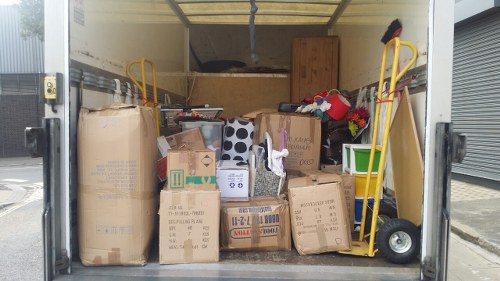 Purpose: This document sets out the health, safety and environmental policy for our commercial waste and rubbish collection services in the service area. The policy is designed to protect employees, contractors, clients and the public by ensuring safe systems of work for commercial waste handling, transfer and disposal. It applies to all operations related to commercial rubbish removal, waste collection and depot activities.
Scope: The policy covers routine rubbish collection, bulk waste removal, recycling operations and temporary storage at client sites. All staff engaged in waste management, from drivers and loaders to supervisors and administrative personnel, must comply with the measures described here. Our approach to commercial waste management emphasises risk reduction, compliance with statutory requirements and continuous improvement.
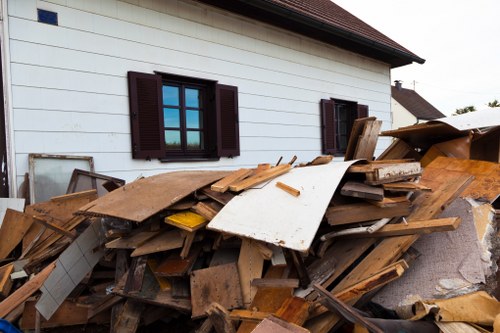 Policy commitments: We commit to maintaining a safe working environment by:
- Assessing hazards associated with commercial waste collection and disposal;
- Providing suitable training, information and supervision;
- Supplying appropriate personal protective equipment (PPE) and ensuring its use;
- Maintaining vehicles, containers and machinery to safe standards;
- Investigating incidents and taking corrective action to prevent recurrence.
Responsibilities: Senior management retains overall responsibility for health and safety, while operational managers are responsible for implementing and monitoring safe systems in the field. Every employee has a duty to take reasonable care for their own safety and that of others and to report hazards, near misses and incidents promptly. Contract staff and subcontractors engaged for rubbish removal activities must meet our safety standards and provide evidence of competence.
Risk assessment and control measures
Risk assessments are carried out for all routine and non-routine tasks associated with commercial waste collection, transfer and disposal. Controls are applied according to the hierarchy of risk control: elimination, substitution, engineering controls, administrative measures and PPE. Typical risks addressed include manual handling injuries, slips and trips, vehicle movements, sharps and hazardous materials in commercial rubbish, and exposure to biological contaminants.Safe systems of work include clear access and egress routes on client sites, secure loading procedures, segregation of hazardous materials, and use of mechanical aids for heavy loads. We maintain written procedures for the identification and safe handling of hazardous waste categories and ensure that drivers and crew are trained in spill response and containment.

Training, competence and communication
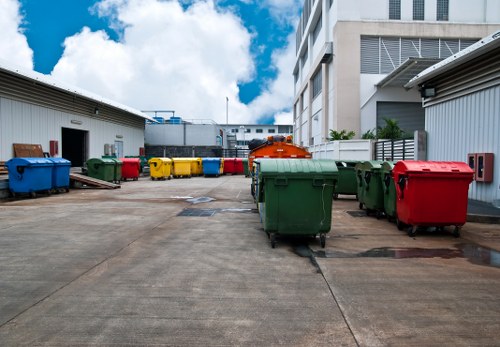
We deliver role-specific training for rubbish collection teams, including vehicle operation, manual handling, permit-to-work where applicable, and emergency procedures. Training records are maintained and reviewed periodically. Safety briefings are conducted before shifts, and tool-box talks address seasonal or site-specific hazards. Clear communication protocols are used to ensure that crews understand client site constraints and any special handling instructions.Equipment and maintenance: Vehicles, compactors, bins and lifting equipment are inspected daily and subject to scheduled maintenance. Faults are reported and removed from service until repaired. We use labelled and colour-coded containers to support safe segregation of recyclables and potentially hazardous commercial rubbish. All maintenance and testing activities are recorded and audited.
 Incident management and continuous improvement: All incidents, near misses and occupational illnesses are reported and investigated to identify root causes. Findings inform corrective actions and improvements to procedures and training. We monitor leading and lagging safety indicators—such as training completion rates, near-miss reports and lost-time incidents—to measure performance and drive safer operations.
Emergency preparedness: Emergency response plans are in place for vehicle collisions, hazardous material leaks and on-site injuries. Crews carry first-aid kits and spill response equipment relevant to their operations. Evacuation and emergency contact procedures are practiced during drills, and arrangements exist to obtain medical assistance where needed.
Occupational health: We promote occupational health through health surveillance where risks justify it, provision of welfare facilities and controls to reduce exposure to dust, fumes and biological agents. Vaccination advice is provided for staff at risk of exposure to certain biological hazards. Mental health awareness and support resources are part of our wellbeing program.
Monitoring and audit: Regular site inspections, vehicle checks and operational audits are conducted to ensure compliance with this policy. Findings are reported to management and used to update risk assessments and procedures. We maintain records of training, incidents, maintenance and audits to demonstrate ongoing due diligence in waste collection operations.
Legal and regulatory compliance: We operate in accordance with applicable health and safety and waste regulations and adopt industry best practices for commercial waste services. This policy is reviewed annually, or more frequently where there are changes to operations, legislation or following significant incidents. The review process involves input from operations, HSE advisors and workforce representatives.
Implementation: The success of this health and safety policy relies on leadership, competence and active participation at all levels of the organisation. Managers will allocate resources to support the policy and employees are expected to cooperate fully. Failure to follow safety procedures may result in disciplinary measures to protect individuals and the business.
Statement of intent: We aim to deliver commercial rubbish collection and waste removal services safely, responsibly and sustainably. By embedding robust safety management, continuous learning and practical controls, we reduce risks to people and the environment while providing reliable commercial waste solutions across our service area.
