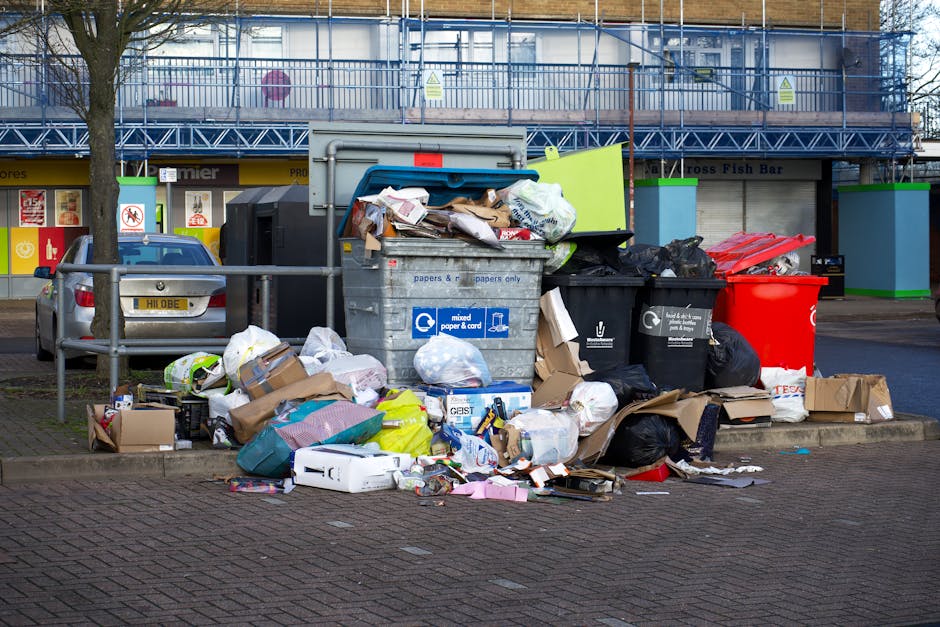
Real cost of commercial rubbish removal for Islington shops
If you run a shop in Islington, rubbish removal is one of those costs that can quietly eat into your margin. A few bags here, a broken display unit there, and suddenly the back room is cluttered, the fire exit looks less than ideal, and the weekly waste bill is doing a sneaky impression of a rent increase. The real cost of commercial rubbish removal for Islington shops is not just the collection fee. It includes labour, access, sorting, disposal type, urgency, and the hidden cost of getting it wrong.
This guide breaks the subject down in plain English. You will see what actually affects price, where shop owners often overspend, how commercial rubbish removal typically works, and how to choose a service that feels fair rather than fuzzy. If you want a practical next step, the pricing and quotes page is the natural place to compare options and get a clearer picture before booking.
Table of Contents
- Why real cost matters for Islington shops
- How commercial rubbish removal works
- Key benefits and practical advantages
- Who this is for and when it makes sense
- Step-by-step guidance
- Expert tips for better results
- Common mistakes to avoid
- Tools, resources and recommendations
- Law, compliance, standards, or best practice
- Options, methods, or comparison table
- Case study or real-world example
- Practical checklist
- Conclusion
- Frequently Asked Questions
Why real cost of commercial rubbish removal for Islington shops Matters
For a shop, waste is never just waste. It is stock packaging after a delivery, old cardboard from a rearranged window display, broken hangers, food waste if you sell consumables, and sometimes bulky items you were not expecting to keep any longer. In a dense London borough like Islington, that mix becomes expensive quickly if you handle it in the wrong way.
The real cost matters because the obvious price you are quoted is only one part of the picture. A lower quote can look attractive, but if it excludes loading, stairs, parking difficulties, out-of-hours work, or specialist handling, the final bill can drift upward. That is where shop owners get caught out. And to be fair, it happens more often than people admit.
There is also the operational side. A cluttered stockroom slows staff down. Waste piled near the shopfront can create poor first impressions. If bags or bulky items block access, you may end up paying for a rushed same-day collection. That tends to be the priciest route, unsurprisingly.
For many Islington shops, the real cost is about balancing three things: convenience, compliance, and control. If you understand those properly, you can usually make a better decision and avoid paying for unnecessary extras. If your business handles regular waste streams, the business waste removal service is worth reviewing alongside ad hoc clearances, because the right setup can reduce repeat costs over time.
How commercial rubbish removal works
Commercial rubbish removal is usually a straightforward process, but the details shape the price. In most cases, the provider assesses the waste type, volume, access, timing, and whether anything needs special treatment before confirming the job.
Here is the practical flow most shop owners will recognise:
- You describe what needs removing, ideally with photos.
- The provider estimates volume and identifies any restricted items.
- A price is based on weight, load size, labour, access, and disposal route.
- A collection window is agreed, often with same-day or next-day options for urgent work.
- The team arrives, loads the waste, and clears the area.
- The waste is sorted for reuse, recycling, or disposal depending on what it is.
The key thing is that volume alone does not tell the full story. Two loads can look similar from the shop floor and still cost very differently. A pile of soft packaging is quicker to move than a load of mixed broken fixtures, damp cardboard, and awkward shelving. The latter takes longer, requires more care, and may end up needing separate handling.
In a busy street near Angel, Upper Street, or around a narrow side road, access can matter almost as much as the waste itself. If a van cannot stop easily, if parking is tight, or if items must be carried a long way from the premises, labour time rises. That is real cost, not just a billing trick.
If you are clearing larger items like counters, fridges, or display furniture, it can help to check specialist pages such as fridge and appliance removal or furniture disposal so you know what may need separate handling before collection day.
Key benefits and practical advantages
It sounds obvious, but professional rubbish removal can save money when it is planned properly. The aim is not only to get rid of waste. It is to do it with less disruption and fewer surprise charges.
Here are the main advantages Islington shop owners usually notice:
- Faster turnaround: waste is removed in one visit rather than sitting around for days.
- Better shop presentation: a cleaner back area and front-of-house space improves the customer experience.
- Reduced staff strain: your team is not spending hours lifting heavy bags or broken fixtures.
- More predictable costs: when the quote is clear, budgeting becomes easier.
- Safer working conditions: fewer trip hazards, fewer overloaded bins, and less manual handling.
- Improved recycling outcomes: good providers separate reusable and recyclable materials where possible.
There is also a subtle business benefit. When waste is handled consistently, stock deliveries and store resets run more smoothly. You notice it on a Monday morning when the roller shutters go up and the space actually feels ready for trade. Small thing, big effect.
Expert summary: The real cost of commercial rubbish removal for Islington shops is rarely the collection fee alone. It is the combination of labour, access, timing, waste type, and the cost of disruption if you delay the job too long.
Who this is for and when it makes sense
This topic matters to a wide range of Islington businesses, especially shops that produce mixed waste or seasonal peaks. If you are wondering whether you need one-off rubbish removal or a more structured arrangement, these are the businesses that usually benefit most:
- Convenience stores and grocery shops
- Fashion and accessory retailers
- Independent cafes with retail spillover waste
- Pet shops
- Phone, tech, or repair shops
- Hair and beauty retailers
- Pop-up shops and short-term leases
- Shops undergoing refits or stockroom clear-outs
It makes sense when waste starts to outgrow your normal bins, when bulky items need clearing, or when the timing of collections matters. A shop refit, for example, can leave you with packaging, fixtures, old shelves, and broken display units all at once. That is usually when people realise the cheapest plan is not always the one with the lowest headline price.
It also makes sense if you are trying to keep staff focused on customers instead of waste runs. A member of staff carrying torn boxes down a narrow staircase on a wet Tuesday afternoon is not, frankly, the best use of anyone's time.
Step-by-step guidance
If you want a more controlled cost, the process starts before collection day. The better prepared you are, the less likely you are to pay for avoidable extras.
1. Identify exactly what needs removing
Separate cardboard, soft waste, mixed rubbish, broken fixtures, electricals, and anything potentially hazardous. Even a rough split helps. Mixed piles usually cost more because sorting takes longer.
2. Estimate volume honestly
People often underestimate how much space rubbish takes up. A few flattened boxes can turn into a very different load once they are stacked. If you are unsure, take photos from a few angles. That tiny bit of effort can save a lot of back-and-forth.
3. Check access before you book
Ask yourself: can a van park close by, is there a lift, are there stairs, are there loading restrictions, and can the team get in without disrupting trading? Access is a major cost driver, especially in central London-style streets.
4. Separate specialist items early
Items like fridges, appliances, and anything classed as hazardous waste should be flagged early. For those, look at pages such as hazardous waste disposal before assuming they can go in a standard load. They often cannot.
5. Ask what the quote includes
Does the price include labour, loading, disposal, VAT if applicable, and recycling? What about parking or congestion-related delays? A quote should be understandable without a decoder ring. If it feels vague, it probably is.
6. Choose a convenient time window
Out-of-hours collections can be worth the extra spend if they prevent lost sales. That said, if your waste is not urgent, a planned daytime slot may be cheaper and easier to coordinate with your opening hours.
7. Confirm payment terms and any conditions
Before booking, review the provider's terms and conditions and payment and security guidance so there are no awkward surprises later. Nobody likes payment confusion in the middle of a busy collection.
Expert tips for better results
These are the small decisions that tend to make the biggest difference in the final bill.
- Bundle clearances where practical. If your shop is already having a reset or refurbishment, combine waste streams in one planned visit rather than piecemeal collections.
- Use staff time wisely. Have waste grouped near the exit, but only if safe to do so. The team should not have to search behind stock cages for stray bags.
- Avoid wet waste contamination. Damp cardboard or food residue can make recycling harder and may affect cost.
- Book before peak periods. Friday afternoons and end-of-month slots often fill up quickly. A little planning goes a long way.
- Ask about recycling rates in plain terms. Good providers should be able to explain what happens to the waste without turning it into jargon soup.
One practical trick: keep a simple log of what you throw away for a month. Nothing fancy. Just a note on what kind of waste appears and how often. After a while, you start to see patterns. Maybe your packaging load spikes on delivery days. Maybe old POS material piles up after marketing changes. That sort of detail helps you negotiate smarter.
If sustainability matters to your brand, it is also worth looking at the provider's recycling and sustainability approach. Lower waste-to-landfill and better sorting can support both cost control and your wider business image.
Common mistakes to avoid
Most expensive rubbish jobs are not expensive because of bad luck. They are expensive because of a few avoidable mistakes. Mildly annoying, but true.
- Booking on price alone: the cheapest quote may exclude labour, waiting time, or special handling.
- Failing to sort waste beforehand: mixed waste can be slower to remove and harder to recycle.
- Ignoring access issues: stairs, narrow pavements, and parking restrictions can all increase cost.
- Leaving booking too late: urgent same-day work often costs more.
- Putting restricted items into a general load: this can create compliance issues or force a reclassification of the waste.
- Not checking the disposal route: if a provider cannot explain how waste is handled, that is a warning sign.
Another common mistake is treating rubbish removal like a one-time admin task when it is actually part of shop operations. Once you stop seeing waste as an afterthought, the costs become easier to manage. A bit boring, yes. Also effective.
Tools, resources and recommendations
You do not need a complicated system to keep waste costs under control. A few simple tools and habits will do most of the work.
- Photo documentation: take quick pictures of the waste pile before booking. It helps with accurate quotes.
- Waste category list: keep a short internal list of cardboard, general rubbish, electricals, fixtures, food-related waste, and hazardous items.
- Collection calendar: note when waste builds up most. Patterns matter more than people think.
- Staff checklist: make sure employees know what can be put aside for removal and what must be separated.
- Quote comparison notes: compare what each provider includes, not just the price headline.
For businesses that also generate furniture, shelving, or shop fittings, the service pages for furniture clearance and builders waste clearance can be useful references during refits, redecorations, or seasonal changes.
If you want a broader view of service fit, the site's about us page is a sensible place to understand the company's approach before you book anything. A five-minute read can save a fifteen-minute phone call later. Which is not glamorous, but it works.
Law, compliance, standards, or best practice
Waste from a shop is not something to treat casually. In the UK, businesses generally have a duty to manage their waste responsibly, keep it separate where required, and use a suitably licensed carrier for collection and disposal. That is the basic expectation, and it is wise to follow it carefully.
For Islington shop owners, best practice usually means:
- keeping waste securely stored so it does not obstruct public access
- separating recyclable materials where practical
- treating electrical items, fridges, and hazardous materials as specialist waste
- keeping records of collections and invoices for your own compliance trail
- making sure staff understand what can and cannot be thrown into general waste
If your shop handles sensitive paperwork, returned customer data, or documents with personal information, confidential shredding may be more relevant than general rubbish removal. That is one of those small but important distinctions that gets overlooked in a rush.
The safest approach is simple: ask what the provider does with each waste type, and do not assume everything can go in one load. If something feels borderline, clarify it before collection. That is the calm, boring, sensible route. Usually the best one.
Options, methods, or comparison table
There are a few common ways to deal with shop waste in Islington, and the right one depends on your volume, timing, and budget.
| Method | Best for | Pros | Watch-outs |
|---|---|---|---|
| Ad hoc rubbish removal | One-off clear-outs, small stockroom jobs | Simple, flexible, quick | Can be pricier if repeated often |
| Planned commercial waste collections | Regular shop waste, predictable volumes | More consistent, easier to budget | Less flexible if waste spikes suddenly |
| Bulk clearance | Refits, closures, major declutters | Efficient for large loads | Needs better preparation and access planning |
| Specialist item removal | Fridges, appliances, bulky furniture, hazardous materials | Safer and more appropriate | May cost more than general waste |
For comparison purposes, the cheapest-looking option is not always cheapest overall. A regular business waste arrangement may save money if your shop produces predictable waste every week. On the other hand, a one-off collection can be better if you only need the service occasionally. The right answer depends on reality, not theory. Funny how often that gets ignored.
Case study or real-world example
Picture a small independent clothing shop near a busy Islington high street. The owner has a post-sale clear-out after a seasonal changeover. There are cardboard delivery boxes, broken hangers, old display signage, a tired shelving unit, and a couple of bulky packaging bins that were never meant to live this long.
At first glance, it looks like one straightforward collection. But once the owner checks access, a few things become clearer. The collection vehicle cannot stop right outside for long. Staff need to keep the front area open for customers. Some of the waste is compact and easy to move, but the shelving is awkward and will take longer. One item is an electrical display unit that needs separate handling.
The actual cost is therefore driven less by the size of the pile and more by:
- labour time to move the items safely
- the need to work around opening hours
- the separation of different waste types
- the limited loading space outside the shop
What helps in a situation like this? Preparation. The shop owner groups waste by type, photographs everything in advance, and books a slot before the weekend rush. The collection is quicker, the team works more smoothly, and the final result feels fairer. Not magic. Just good planning.
Practical checklist
Use this before you book commercial rubbish removal for your Islington shop:
- List all waste items clearly
- Separate cardboard, general rubbish, bulky items, electricals, and anything hazardous
- Take photos from more than one angle
- Check access, parking, stairs, and loading restrictions
- Confirm whether labour is included in the quote
- Ask how recycling is handled
- Review terms, payment, and booking conditions
- Choose a collection time that fits trading hours
- Make sure staff know what should stay and what should go
- Keep a record of the collection for your files
Quick takeaway: the best way to lower the real cost of commercial rubbish removal for Islington shops is to reduce ambiguity. Clear waste type, clear access, clear timing, clear pricing. The less guesswork, the better the result.
Conclusion
The real cost of commercial rubbish removal for Islington shops is shaped by more than the headline quote. Waste type, access, urgency, labour, compliance, and disposal method all play a part. Once you understand those pieces, you can compare providers more confidently and avoid the kind of add-on charges that make a simple job feel oddly expensive.
For many shops, the smartest move is not chasing the cheapest collection. It is choosing the cleanest, clearest, most reliable option that fits the way your business actually works. That might mean a one-off clearance, a regular waste arrangement, or a specialist service for bulky or sensitive items. Either way, the goal is the same: keep the shop running smoothly and the costs under control.
If you are planning your next clearance, a quick review of the options can save time, money, and a fair bit of stress. And yes, the back room will feel better for it too.
Get a free quote today and see how much you can save.
Frequently Asked Questions
How much does commercial rubbish removal usually cost for a small shop in Islington?
The cost depends on the volume of waste, the type of items, access to the premises, and whether the job needs extra labour or specialist handling. Small jobs are usually more affordable when the waste is easy to load and the collection is planned in advance.
What affects the price the most?
The biggest drivers are waste volume, weight, access, timing, and whether the load includes bulky, electrical, or hazardous items. In practice, a difficult-access job can cost more than a larger but easier one.
Is same-day rubbish removal more expensive?
Often, yes. Urgent collections usually cost more because they need quicker scheduling and tighter logistics. If your waste is not urgent, booking ahead can be a better-value option.
Do I need to sort the waste before collection?
Sorting helps a lot. Separating cardboard, general rubbish, furniture, electricals, and hazardous items can make the job faster and may reduce cost. It also makes recycling easier.
Can I put old fridges or appliances in a general rubbish load?
Usually not. Fridges and appliances often need specialist handling, so it is best to check the dedicated fridge and appliance removal service before booking.
What if my shop is on a narrow Islington street with poor parking?
Access matters. Narrow streets, loading restrictions, and limited parking can increase labour time and therefore cost. It helps to mention access issues early so the quote is realistic.
Is commercial waste removal better than using regular bins?
For many shops, yes. Regular bins are fine for everyday waste, but larger clear-outs, bulky items, or mixed waste streams usually need a more flexible service. A tailored collection can be more efficient.
How do I know if a quote is fair?
A fair quote should be clear about what is included, how the waste is handled, and whether any extras might apply. If the price seems unusually low and the details are vague, that is worth questioning.
Should I use one-off collections or a regular service?
If your waste is predictable week to week, a regular service may be the better fit. If waste is occasional or tied to refits, seasonal changes, or clear-outs, one-off collections usually make more sense.
What should I ask before booking?
Ask what is included in the price, how access will affect the job, whether specialist items cost extra, what payment terms apply, and how recycling is managed. That short list saves a lot of awkwardness later.
Can commercial rubbish removal help during a shop refit?
Absolutely. Refits often generate mixed waste, old fittings, cardboard, and bulky items. In those situations, a planned clearance can keep the project moving and reduce disruption to trading.
Where can I check pricing details before I book?
The most useful place is the pricing and quotes page, which helps you compare options and understand what to expect before you commit.